Celebrities, guests, the press—all gone. From now on, the experts have free rein. They’ll be testing like there’s no tomorrow—until the cables glow (unless they’re liquid-cooled!). We’ll explain how this works and what the process has to do with speed dating in the following paragraphs.
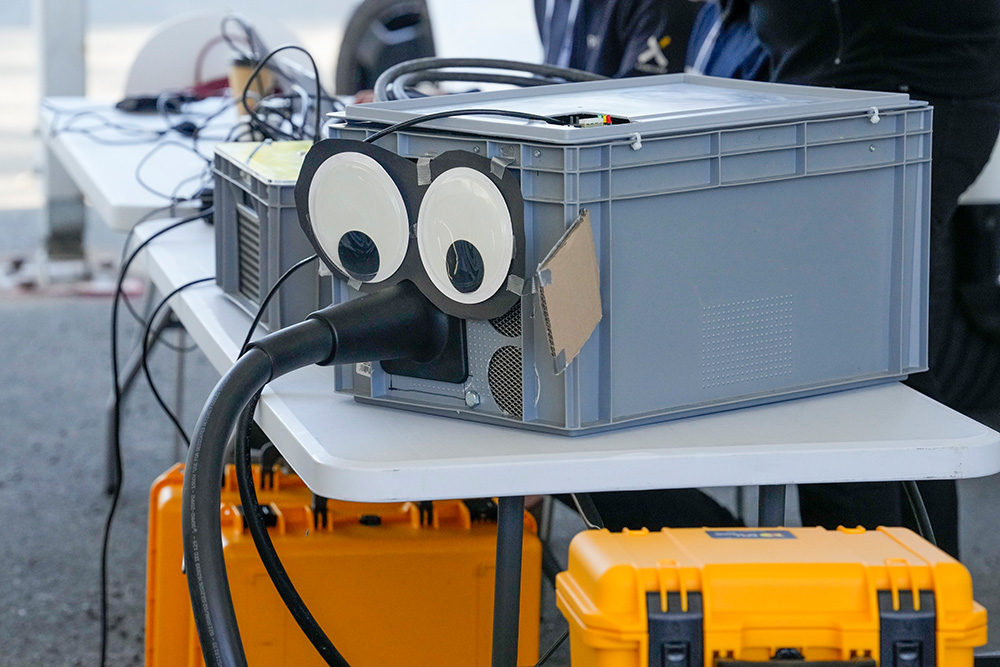
“Quite a lot of wiring.” Andreas Diekmann is at operating temperature. The expert on all things related to e-mobility hardware at Phoenix Contact is pitching in to run the wires. And those “wires” are as thick as an arm! Diekmann and Michael Lakemeyer from the plant engineering department at the Blomberg site have not only spent months planning for the CharIN Testival. The two of them, along with numerous other helpers, are also indispensable for ensuring that the ambitious test plan can be carried out.
Newly Matchmade
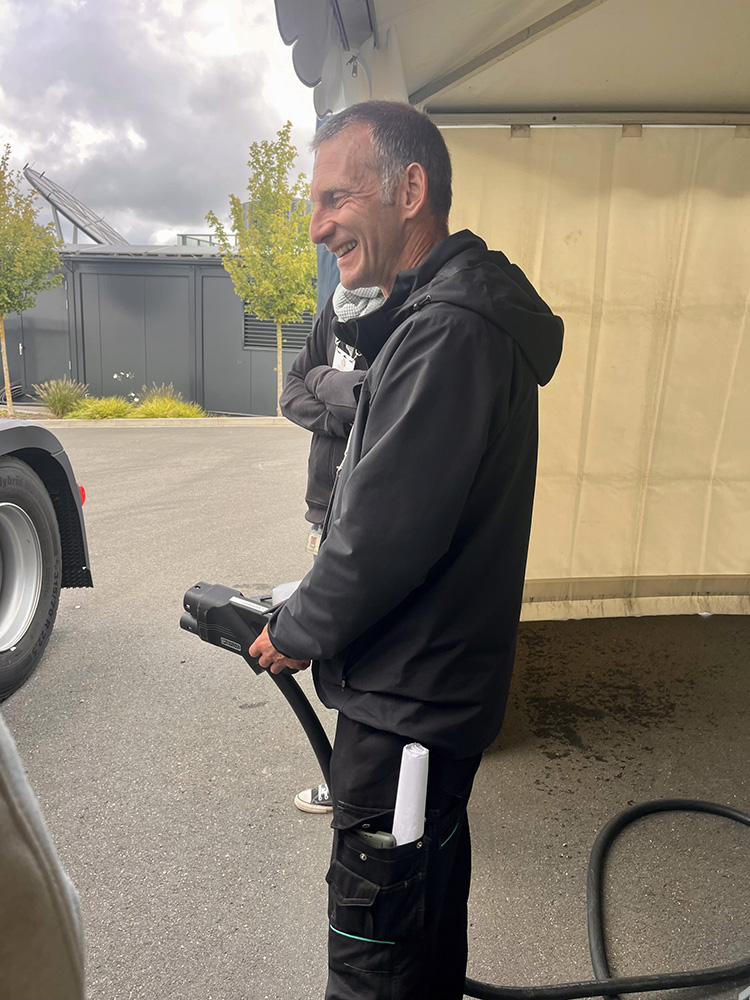
The challenge: For three full days, 14 charging stations, six test systems, and ten vehicles must establish a seamless connection—all in a continuous cycle. After 90 minutes of testing, the vehicles are disconnected, repositioned, and reconfigured, then the process continues with a new combination. Does the pairing work? Does the testing process function properly? Why does the connection keep dropping? Or why does it work right away here, but not at all before? The data collected here is directly incorporated into the development and improvement of prototypes and pre-production models.
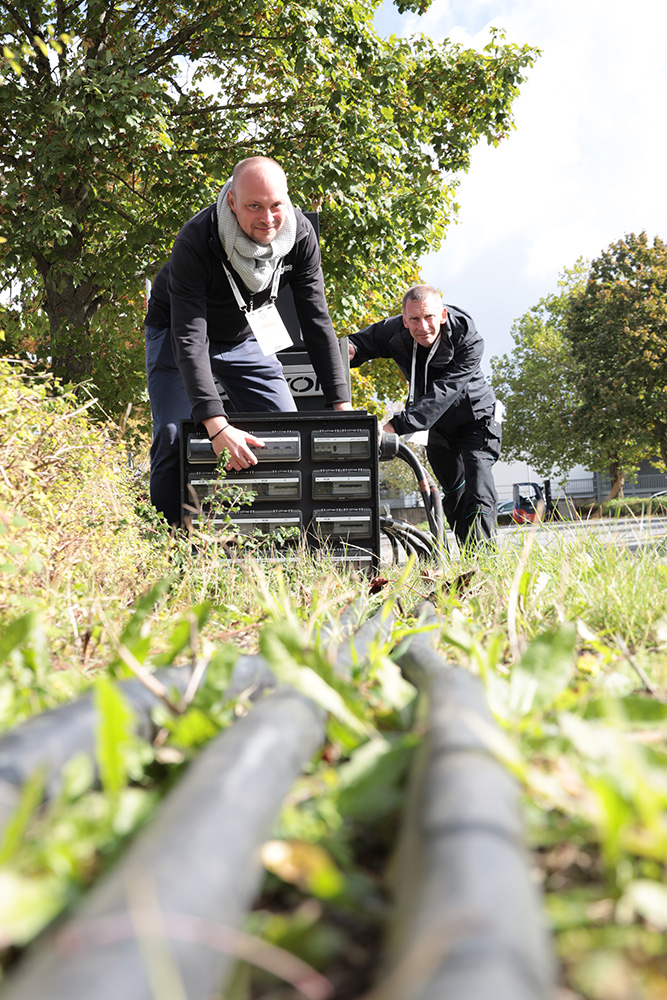
Time to take a deep breath. All the vehicles have found their new spots, all the cables are plugged in, all the adapters have been located, and the laptops are out. Finally, it’s time for Diekmann and Lakemeyer to have a hot cup of coffee. It’s pretty chilly this morning. The forklift operator stops by. They quickly go over the schedule to discuss how to handle the next switch. Copper is heavy and DC charging cables are thick, so that’s where the colleague with his forklift comes in.
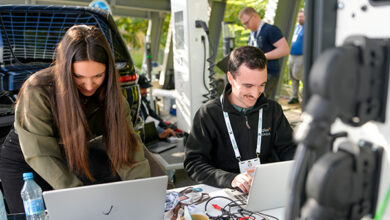
Whenever a vehicle or a charging station cannot find a matching counterpart, the mobile test benches are also put into use. Although cables and inlets are also waiting to be connected to each other on these benches, at the other end of the cable, the computer simulates either a vehicle or a charging station.
Give and Take – Bidirectional Charging
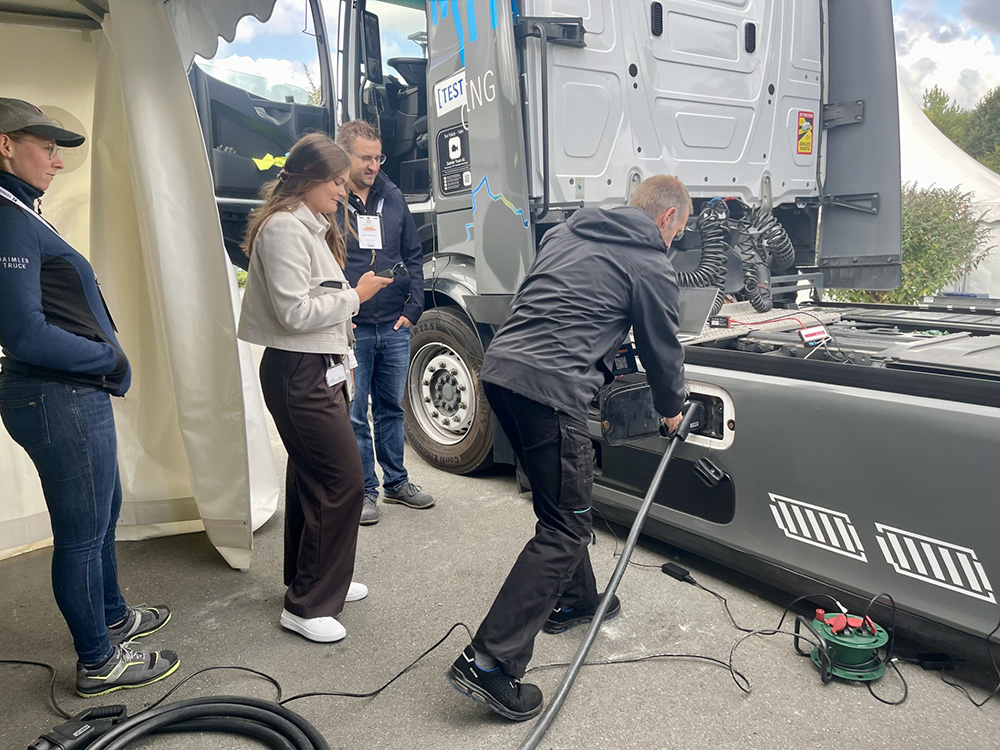
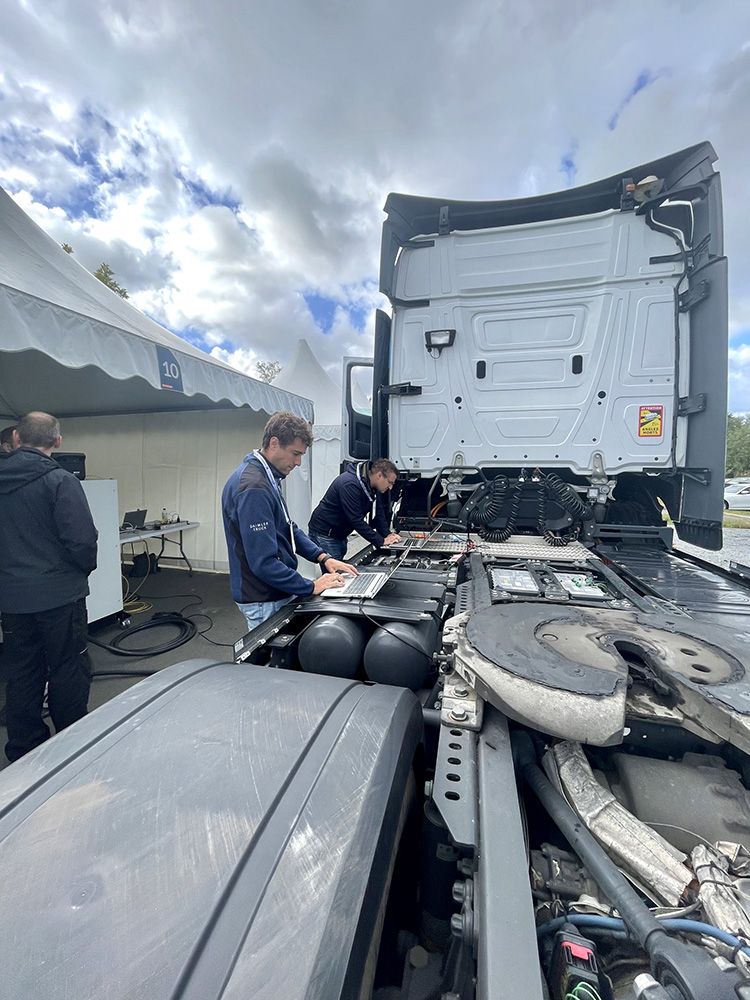
Andreas Diekmann has a dual role during the fantastic test days in Blomberg. Whenever “Mister Hardware” isn’t busy connecting charging stations to vehicles and lending a hand to the test teams, the engineer works alongside Phoenix Contact’s in-house team at their own test stand to put the latest developments in power electronics to use. After all, Phoenix Contact isn’t just hosting the event—it’s also naturally taking the opportunity to pair CHARX components with all kinds of vehicles in numerous combinations. Götz Poenaru nods with satisfaction: “It works right off the bat.” The Phoenix Contact software developer looks with pride at the Mercedes eActros, which is being tested for its bidirectional capabilities. The connection works right away; at the signal, the giant transfers some of its power. A quick command via laptop, and then the truck is charging again. Both teams are happy, because the exchange doesn’t always go this smoothly.
Team Spirit
Time flies by, and the teams disconnect vehicles from charging stations or test benches. It’s not just the nearly silent transition between stations that’s impressive—only a faint hum can be heard as the electric vehicles start moving. What’s also impressive is the focus with which the experts exchange ideas, put their heads together, and discuss details. The CharIN Testival isn’t an event featuring competing companies, but rather a productive exchange among the industry’s brightest minds—all taking place in an inspiring atmosphere of collaboration.