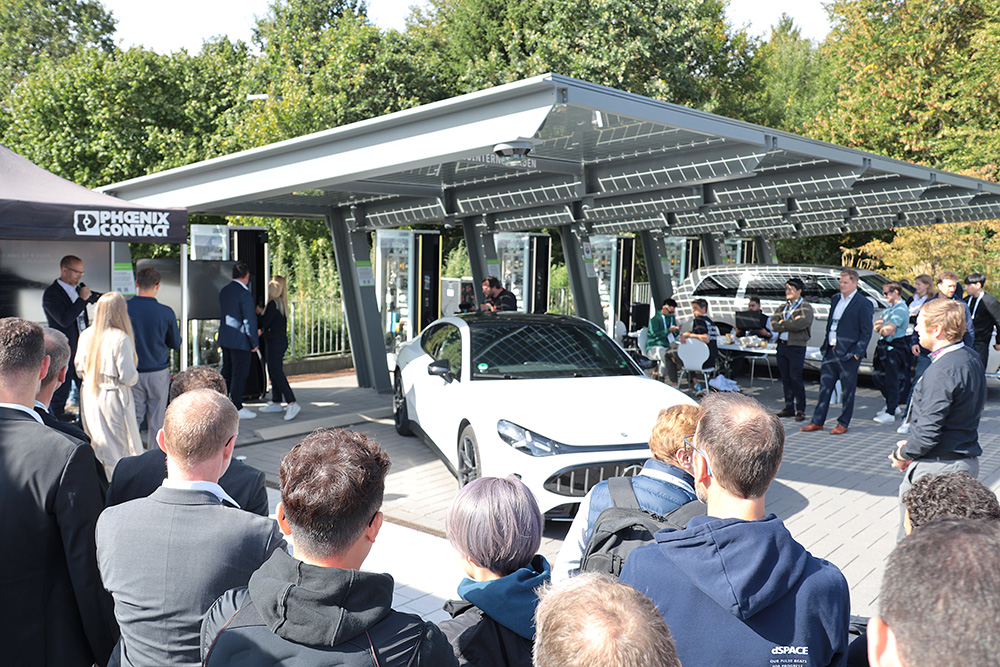
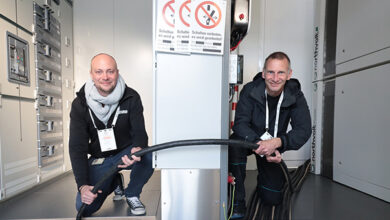
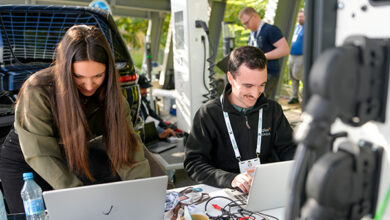
From theory to practice: The second day of the CharIN Testival was packed with events, guided tours, discussions, and plenty of technology. While things got serious at and on the test stands, practitioners had their say during a series of presentations at the All Electric Society Park. Public Day is intended to serve as a bridge between technical development, practical application, and social dialogue. Et voilà… that’s exactly how it turned out.
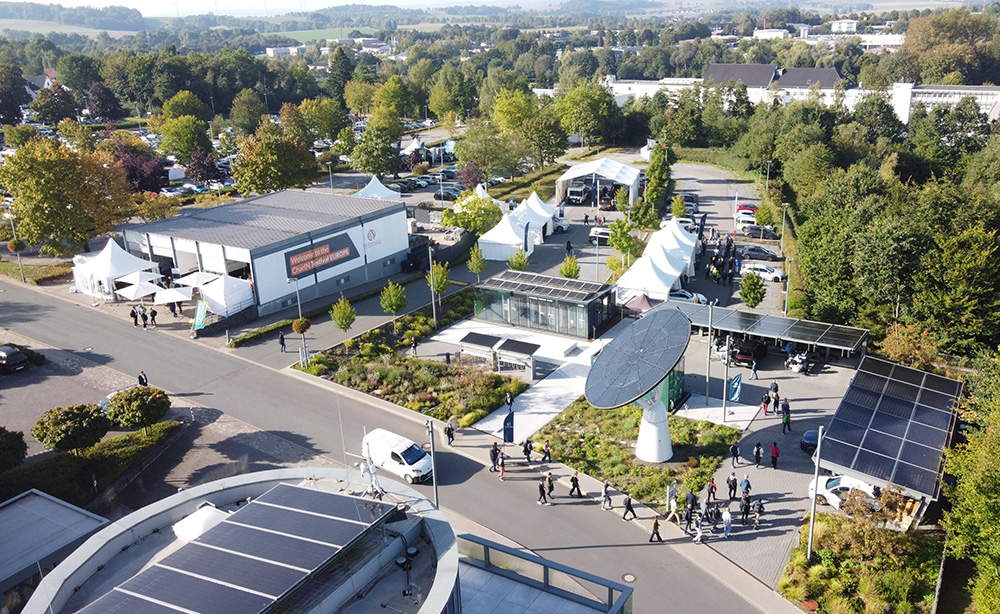
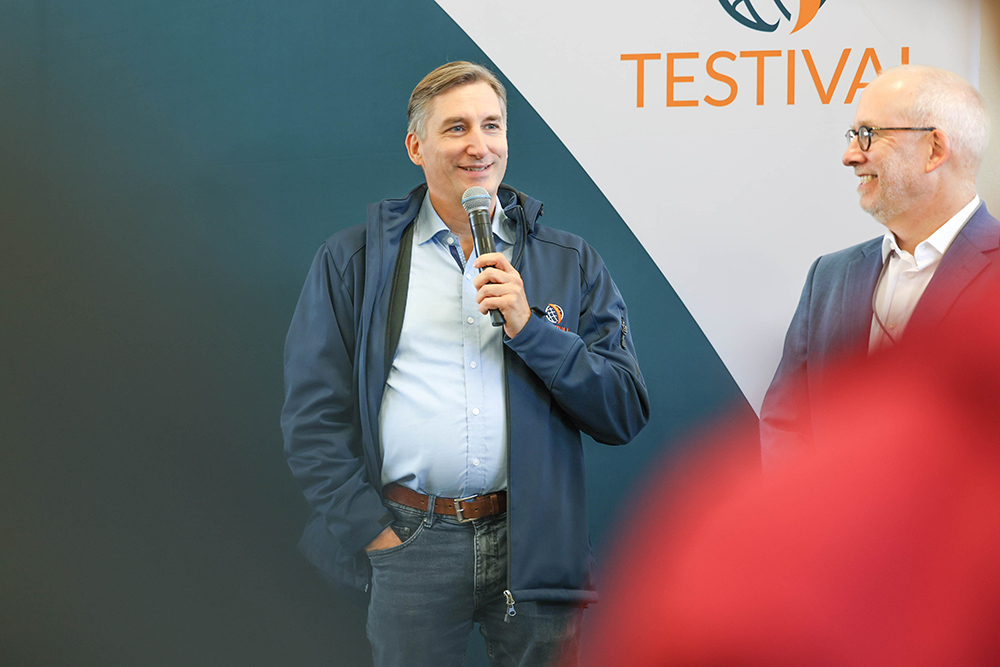
The weather gods certainly went out of their way to treat the colorful group of experts from around the world—late summer in East Westphalia was at its best. No wonder Michael Keller, CTO of CharIn, was swept up in the spirit and welcomed the numerous experts, guests, and journalists at 9 a.m. sharp in high spirits. While the technicians and engineers were already hard at work, a treasure trove of topics and guided tours awaited everyone present who didn’t have a wrench or measuring device.
Secure at the charging station
It quickly became clear to the participants in the lecture series: The future of e-mobility and energy supply no longer depends solely on the expansion of the charging infrastructure. Rather, a comprehensive, interconnected ecosystem is currently emerging in which power generation, energy storage, power grids, charging infrastructure, and smart energy management systems must work closely together. A key component of this is the security of networked data flows. It quickly became clear that without cybersecurity, the energy and mobility transition cannot be achieved.
2 Atoms – 1 Molecule = A Tool for the Energy Transition
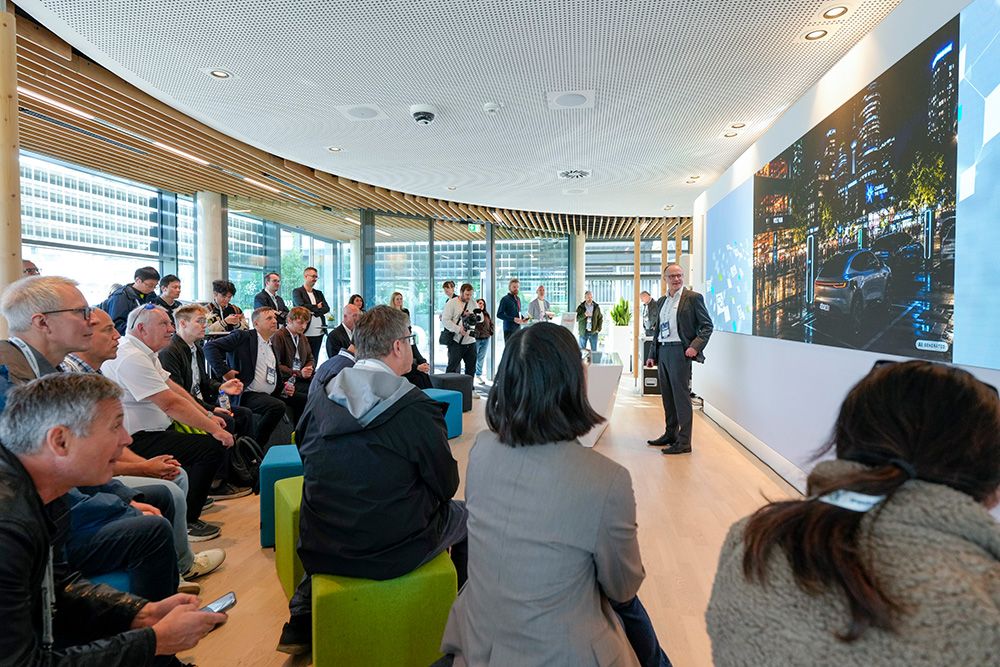
The success of the energy transition depends on how efficiently different technologies are integrated with one another. Thomas Oesselke is one of the experts at Phoenix Contact specializing in hydrogen, among other topics. In his presentation, the expert explained how this volatile element can help ensure success not only as a propulsion component in engines but also in the area of grid stability. The goal of these efforts is to integrate various technologies and storage solutions as seamlessly as possible.
When the Wind Runs Out of Steam
A recurring theme of the event was the realization that innovation alone is not enough. While modern technologies form the foundation for the energy transition, additional conditions are necessary for broad market penetration. Standards, interoperability, and solutions that simplify implementation are viewed as critical success factors. The issue of short- and medium-term storage capacity is playing an increasingly important role, particularly in the field of e-mobility. Without battery storage systems, it is impossible to harness the volatile fluctuations of wind and solar power in a way that benefits the grid.
DC in the Grid
Ultimately, the goal is to simplify complex processes. That’s why the focus was not only on charging infrastructure and electronics, but also on intelligent energy management systems and practical challenges along the entire value chain. Phoenix Contact is not only a manufacturer of components but also uses its own technologies, as Tobias Lüke demonstrated at the All Electric Society Factory building. This facility houses not only the company’s in-house tool shop but also a fully operational direct current network. Many participants took the opportunity to tour the innovative production facility in person immediately following the presentation.

How power electronics can be used to compensate for any shortfall in grid connection capacity, or how smart energy management systems support the infrastructure were also topics of discussion, as was the unexpectedly fascinating issue of charging cable thieves, who not only cause property damage but can also undermine the credibility of reliable e-mobility.
Conclusion
At the end of the second day, Ronald Heinze, editor-in-chief at VDE-Verlag and a long-time expert on electrical engineering and automation, aptly summed it up: “The day was extremely interesting and, above all, very diverse. It was fascinating that nearly all aspects of integrating e-mobility into the broader context of the energy transition were covered. For me, this CharIN Testival is therefore a very special and unique event.”