Non-partisan and yet in the interests of his own employer. Seeking compromises with a clear edge. Often until late in the evening. If necessary with a veto and a njet. Sounds like a politician? For more than three decades, Ralf Hausmann has been operating in a field that can be just as international and just as explosive.
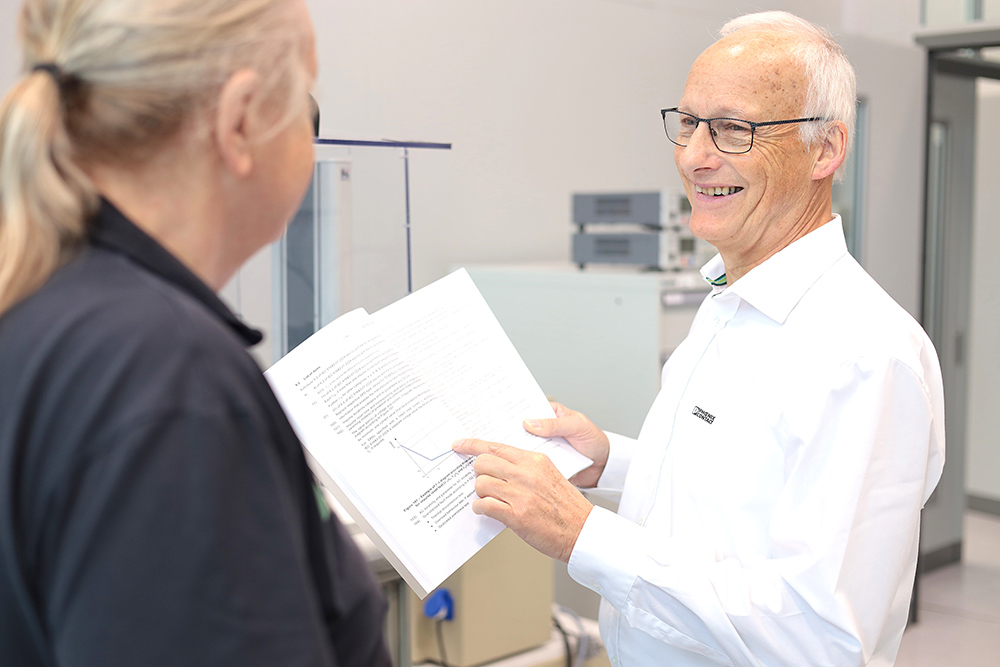
When it comes to standards at Phoenix Contact, the name Ralf Hausmann is often mentioned. The graduate engineer, who has been working in Blomberg since 1987 (“almost with an inventory number”), is a real institution in his field. For decades, he has headed the “Surge protection for telecommunications and signal processing networks” working group on the international, European and German stage. He knows his field of work from the ground up: “I started out as a developer in the surge protection laboratory,” says Ralf Hausmann during a visit to the surge protection laboratory. “Back then, however, we were still in Building 10, with normal offices around us. And when we generated a lightning strike, it was really loud, it made quite a bang.”
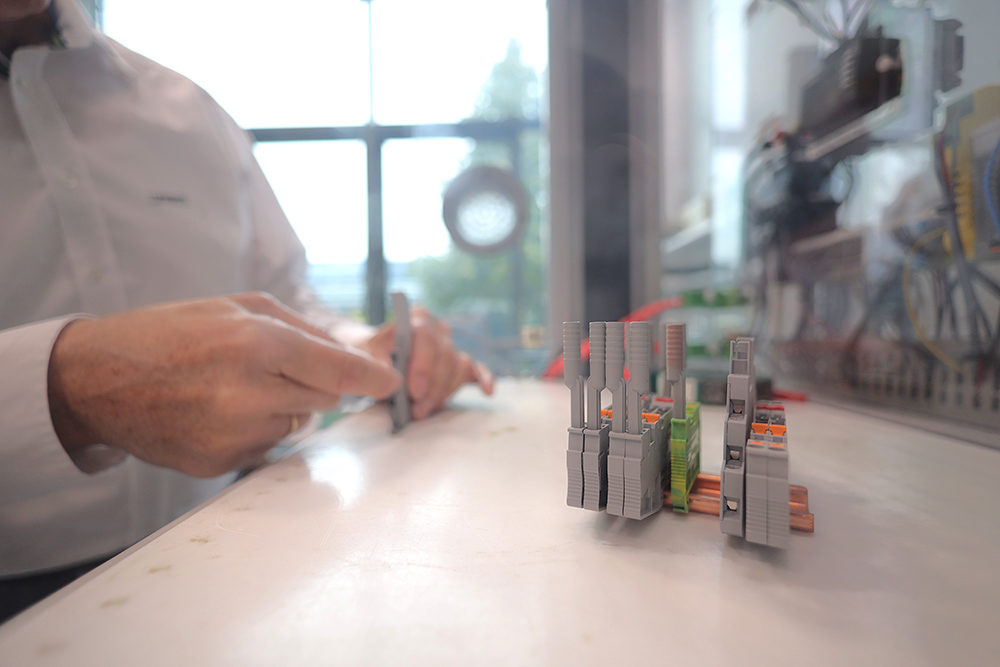
The noisy handling of surge current generators quickly became so important for product development in surge protection that Phoenix Contact decided to build its own new building. Much to the delight of developers such as Ralf Hausmann, and certainly also to the relief of the employees in the offices around it.
The measure of all things
“I slipped into the field of standardization in my fourth year of work,” says Hausmann, describing his first steps in this demanding field. Initially, his area of responsibility included European standardization, but he quickly moved on to German standardization as well as the higher-level international standardization IEC. “If you really want to make a difference, i.e. contribute your expertise to standardization, then you have to be part of the International Electrotechnical Commission. All other standards are derived from this.”
When asked whether special qualities are required to work successfully in the field of standardization, Ralf Hausmann emphasizes patience above all: “Work on a standard is rarely completed in one or two years. It can take five years or even longer to complete a standard. There are representatives from companies all over the world at the table, with different backgrounds, different interests and a colorful mix of cultures. For example, Americans meet Japanese. It’s hard to imagine greater differences in negotiations (smiles).” The man from Blomberg has become a globetrotter. The USA, Japan, China, Costa Rica, Australia (“it took more than 30 hours to get there”) and many European countries were meeting points for the international community.
Bean counters unwanted
What you don’t need in these rounds are overly precise bean counters. “You also have to keep a straight face, because otherwise a standard will never be completed without compromises. In case of doubt, a standard, which usually describes something completely new, has to be adapted and revised the following year.” Ralf Hausmann is no exception; he too has had a learning curve. “But since I’ve been chairing the IEC working group on surge protection for telecommunications and signal processing networks, I’m much more relaxed in the discussions.” The engineer has held this responsibility for a good 25 years. An asset that Hausmann also puts to good use: “Age and experience count in these meetings. That gives you a healthy dose of authority when things get heated.”
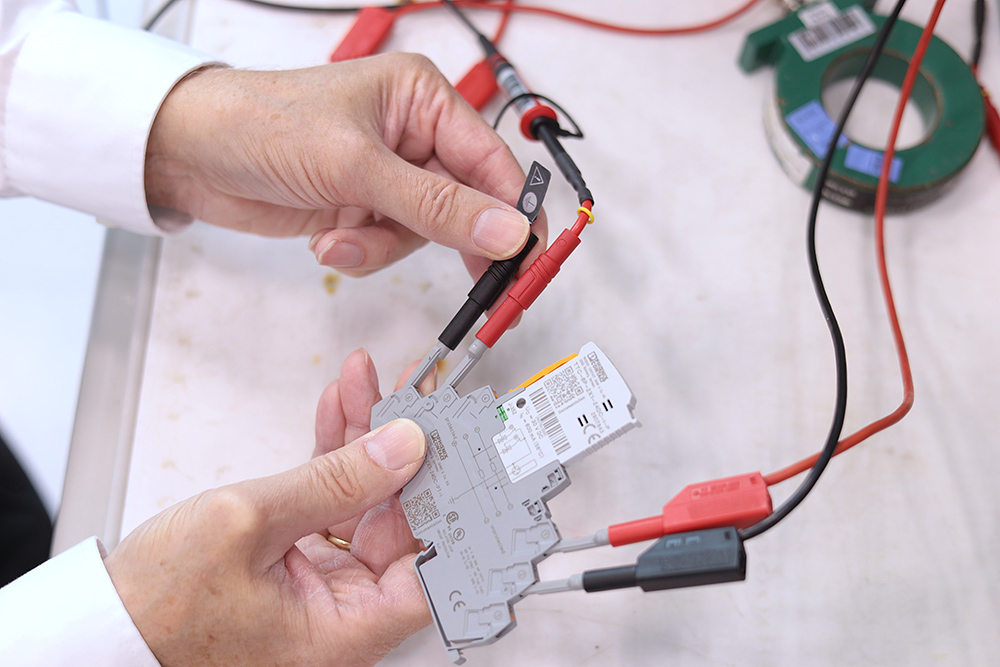
The work in the standardization committees has also changed: “The tone has become rougher these days and things are becoming increasingly political. This not only affects individual companies, but often also nationwide interests. Sometimes it gets pretty heated, and things can get heated. But usually a solution is found, often over an evening beer in good company. This search for compromises is simply part and parcel of standardization.”
Balancing act between the chairs
There was never any pressure from his employer over the years, assures Ralf Hausmann. “I’m very close to the product, but not a product developer. And of course I go into international negotiations with the German competitors. This collaboration is also so important because I can see what’s coming for the industry at a very early stage, during the pre-development of a standard. And of course I also bring this information back home, to Phoenix Contact.”
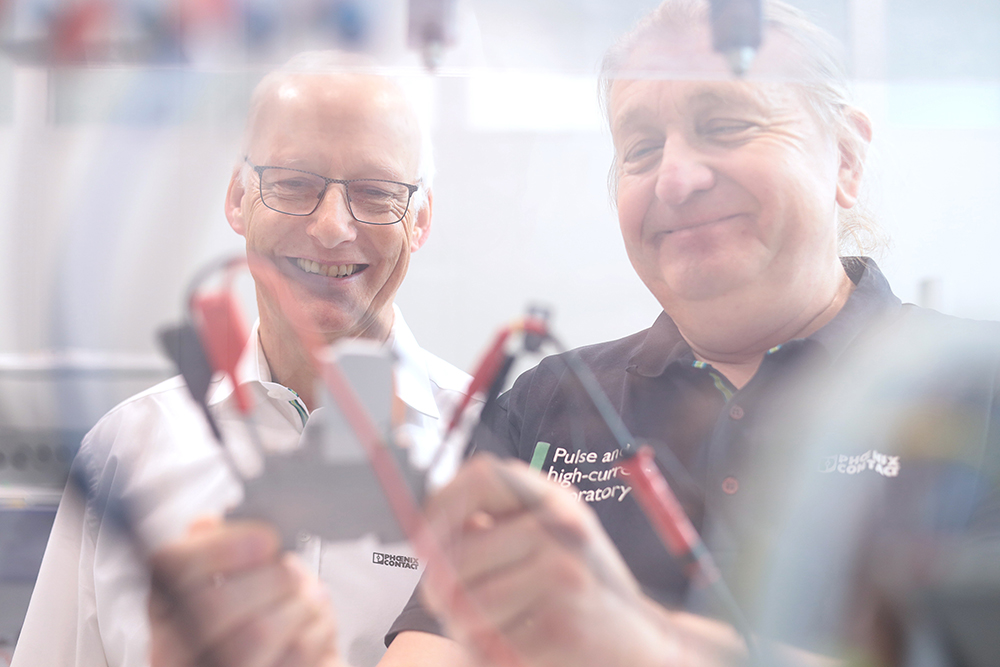
Ralf Hausmann is a convinced Phoenixian. But his role as Chairman requires him to be non-partisan. This balancing act is not always met with applause from within the company: “A standard should reflect the state of the art. If the standard places higher demands on the safety of products, then a product may have to be modernized. This causes effort and costs.”
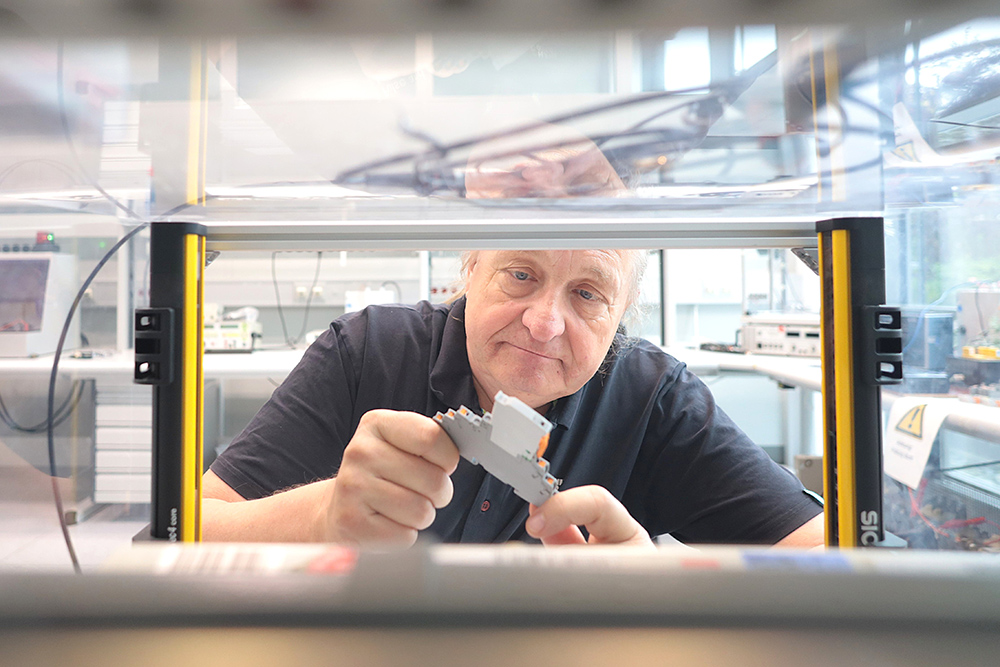
Hausmann explains this using the current standard as an example: “For me, it is important to make standardization and the resulting changes in test procedures and products as sensible and practicable as possible, of course also in the interests of my employer and for all other market players. One example is the new standard for the surge protection product family in telecommunications and signal processing networks. There is also a new basic standard for the surge protection of power supplies, which was largely drawn up by a committee for power supply protection devices. This also had to be taken into account. But some of my colleagues in the power supply industry measure things differently and have different product and safety requirements. That cost me quite a few gray, or rather white hairs (smiles). In the end, after tough negotiations, I managed to get us to introduce a power threshold in our standard. Anything below the limit of 100 watts, such as our measurement control circuits with small 5 to 24 volts and where only milliamperes flow, is not safety-relevant. Therefore, some tests from the basic standard do not have to be applied. And the products can remain as they are manufactured today.”
Acceptance through pragmatism
This pragmatic approach, which was of course hotly debated, makes the standard useful. It is important for manufacturers that there is now a basis for basic tests. Only all deviating tests for the respective special areas are included in the sub-standards. Ralf Hausmann: “This means that only around five percent of all Phoenix Contact products that fall under the IEC 61643-21 standard are affected by changes. This keeps the effort for us and all other companies that develop products in this area manageable and still ensures a gain in safety.”
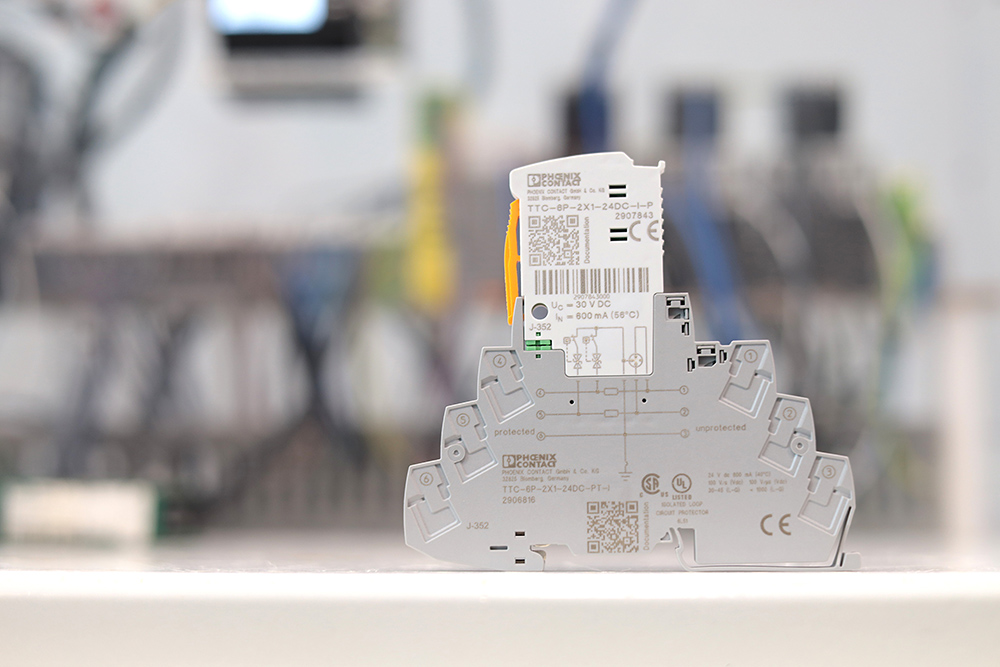
It’s clear that there’s never a dull moment when it comes to standards. “The current standard is almost finished. But it will start again in four years at the latest, and the experiences of the coming years need to be taken into account.” Then new work awaits the diplomats when it comes to standardization. And one or two longer rounds of negotiations …
Überspannungsschutz für Informationstechnik und Telekommunikation