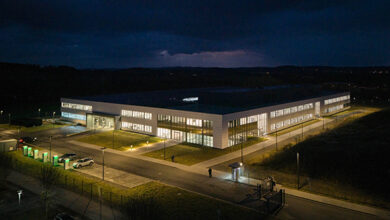
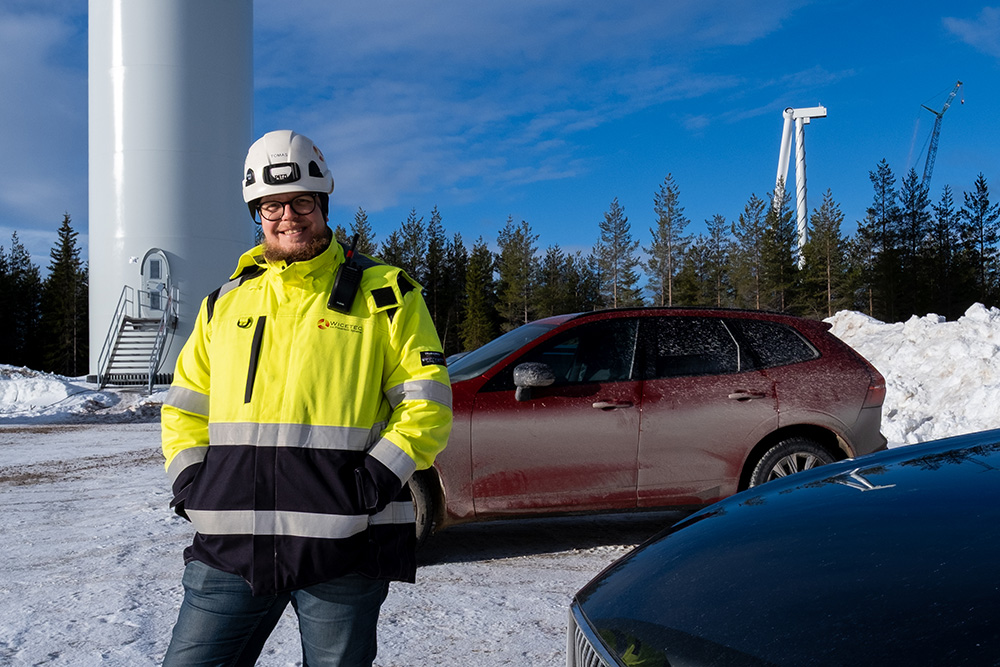
A sunny disposition with cold feet – anyone who has the pleasure of talking to the experts from Wicetec cannot help but smile. But the mission of these extremely likeable Finns is icy cold and dangerous. How do you stop ice from forming on wind turbines?
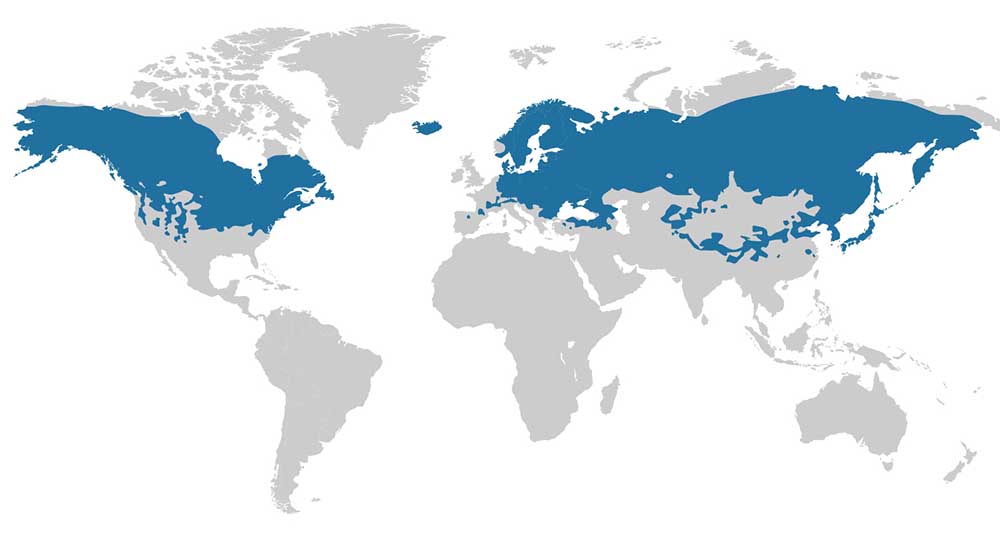
Ice formation on wind turbines has long since ceased to be an issue in northern climes. As the towers of the turbines are getting higher and higher and the lengths of the rotor blades are increasing, these blades are sweeping through ever higher and therefore colder layers of air. This means that ice formation is increasingly becoming an issue in places where you often wait in vain for a white Christmas on the ground.
The frozen water that tends to cling to the rotor blades, especially in cold, damp weather, has several unpleasant properties. Firstly, the carefully balanced rotor blade loses its efficiency and significantly less electricity is produced. Even a few millimetres of ice can cause an aerodynamic stall, as it adds a new and unwanted structure to the carefully smooth surface. Secondly, it becomes a disastrous projectile if it detaches from the blade at full speed. Finally, if it grows to a centimeter thick, it causes imbalances in the entire rotor blade, which leads to significantly increased wear of all mechanical components.
In order to put a stop to this material-killing and life-threatening activity, wind turbines without rotor blade heaters that are infested with ice are slowed down by the operators in their rotating and energy-generating activities. This, in turn, is of little amusement to electricity customers and investors, as it also reduces the potential profits from electricity production. And it also makes the installation of rotor blade heaters, whether retrofitted or as part of the production of new turbines, financially viable.
“We also initially developed heating systems for retrofitting,” says Tomas Wallenius, describing the beginnings of Wicetec. The 44-year-old engineer is an expert in thermodynamics and co-developed the patented heating system. Today, as CTO, he is one of the two General Managers of the Helsinki-based company.
“We founded our company in 2014 as a spin-off from a state research institute, without any external funding and independent of the wind industry.” The Finns secured their first technology license deal for new turbines in 2015 for a Swedish wind farm with Chinese turbines, and the first retrofit orders in 2016 in Canada, where 41 turbines altogether have been retrofitted with rotor blade heaters. More than 350 turbines, mainly in Canada, Sweden and Finland, now rotate with the carbon fiber heating technology.
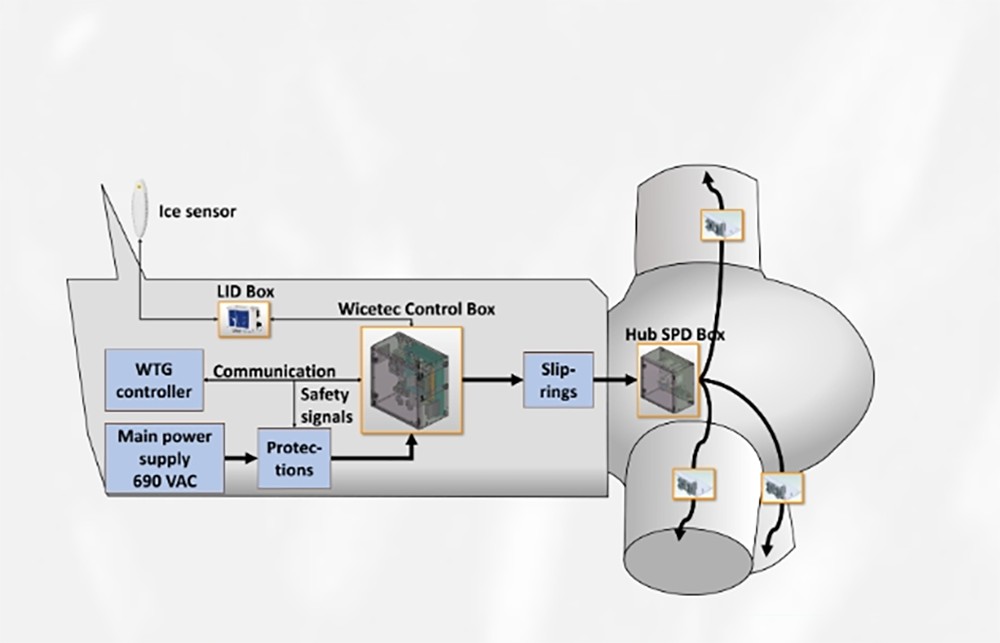
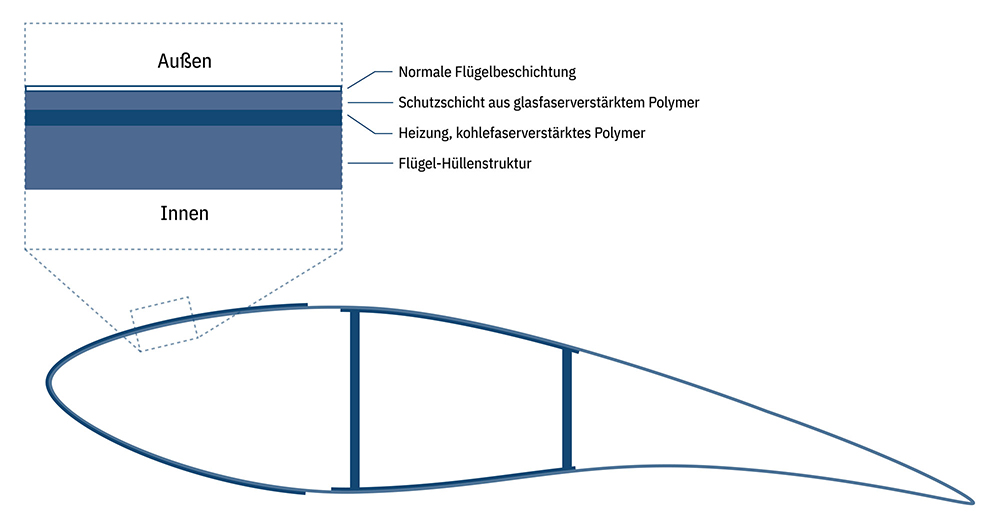
Carbon heating mats are super-thin and only half a millimeter thick, including the paint. At the same time, they are extremely resilient and can withstand the constant vibrations of the blades for decades. The average power consumption of the heating mats themselves is around 50 kW on a 7 MW turbine. A technological highlight is the sensor that determines heating of the blades. Because it is virtual. “A physical sensor is very expensive, difficult to install, and maintain,” explains Wallenius. “Our virtual sensor is based on an algorithm that runs on a PLCnext Control from Phoenix Contact. Measured weather data from turbine is fed into the controller and interpreted based on our decades of experience to produce a reliable temperature distribution along the blade.”
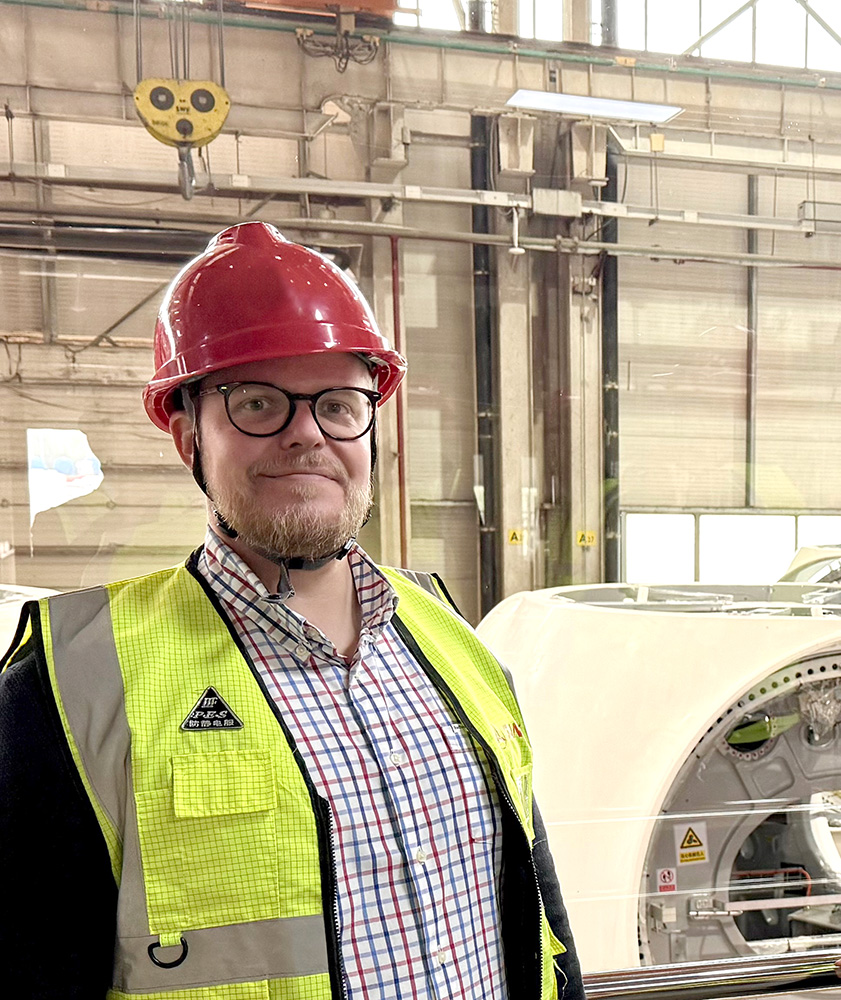
In the meantime, however, the Finns are focusing primarily on integrating their systems into the rotor blade production process. “Retrofitting is of course still an important part of our range. But it has become clear that a retrofit is disproportionately expensive and time-consuming. After all, the blades have to be dismantled and transported to a hall where we can install the carbon mats. Today, many investors are already demanding ice prevention systems because the returns from more stable operation are naturally higher. And in Quebec, for example, the authorities are even making the heaters mandatory so that the windmills run more steadily and grid stability is not jeopardized.”
There are only a few competitors in the field of rotor blade heaters because “the business field is difficult, as you have to adapt each system precisely to the manufacturers and models. This requires a lot of know-how and expertise.” So rosy conditions for the Finnish innovators? Tomas Wallenius has to smile: “The most astonishing thing for us is how slowly the topic of ice on wind turbines is gaining acceptance among operators, manufacturers and investors. But we are making good progress.”