Every day, humanity releases about 100 million metric tons of CO2 into the atmosphere. That is far too much to ensure a livable future for humanity. In Hamburg, researchers are working on a technology to ensure that future generations can survive as well. And off the coast of Heligoland, it’s learning to swim …
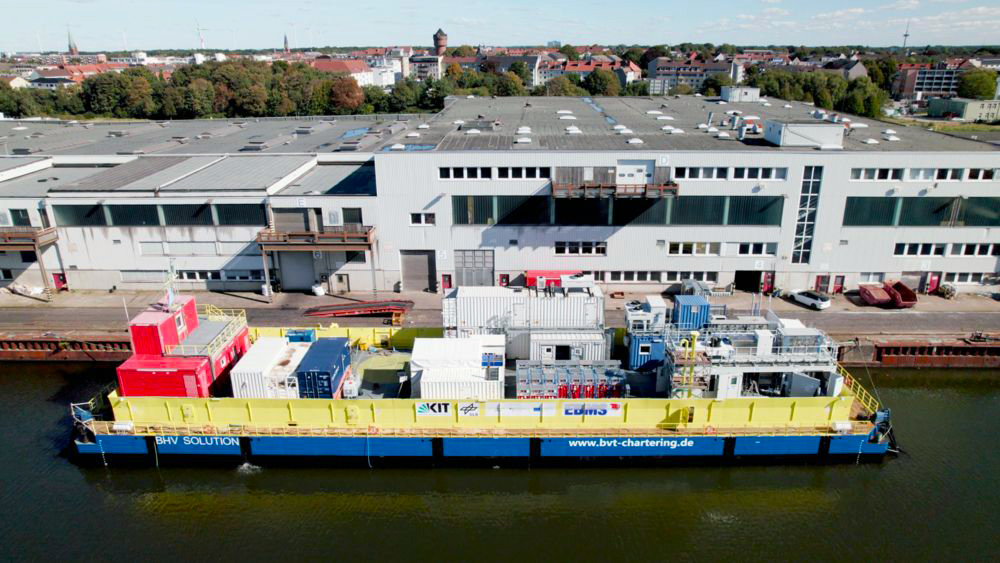
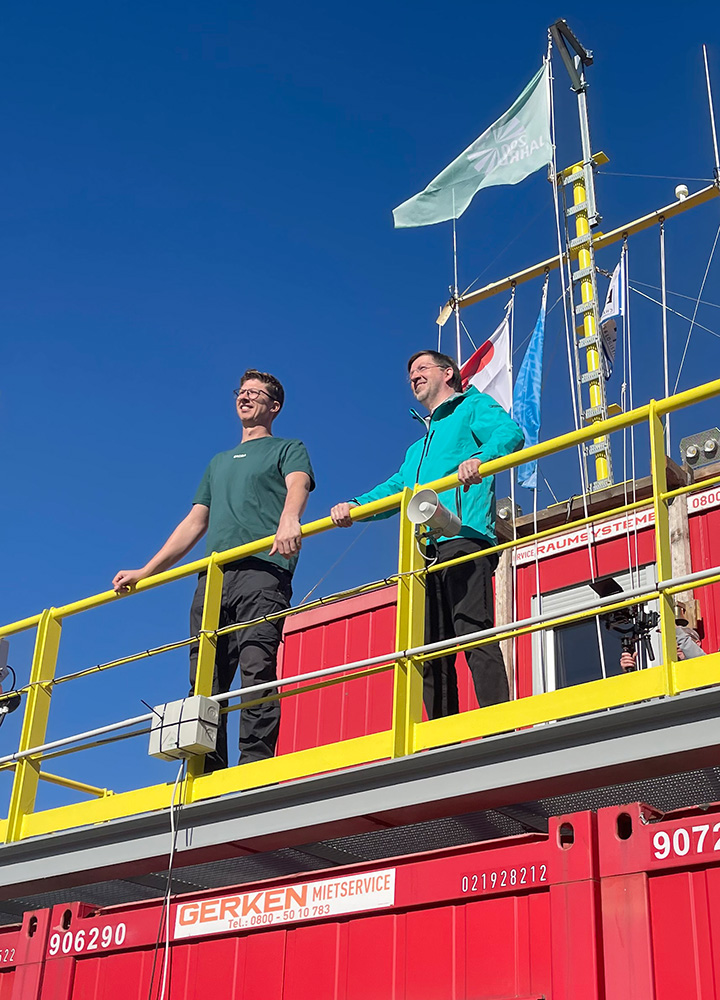
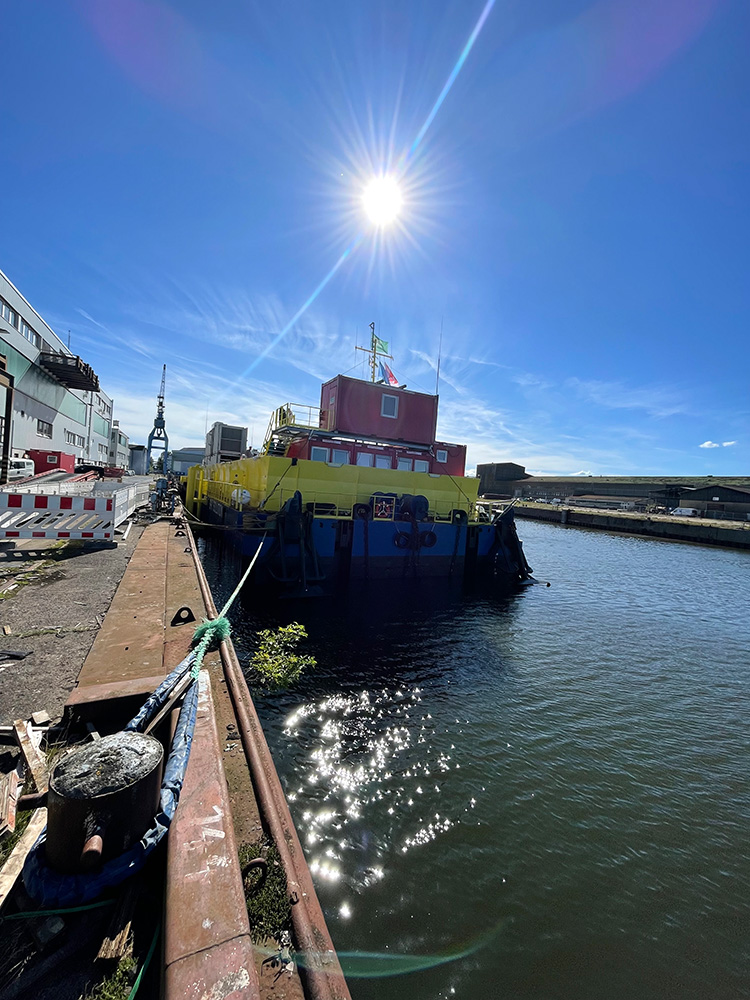
It sways a little as a tugboat rushes past. A hint of what’s to come. Because once the platform—which is currently moored here in a harbor basin in Bremerhaven—has reached the open and wild North Sea, all we can do is wish the engineers and scientists working here a pretty strong stomach.
Ultimate Goal: Offshore e-fuels
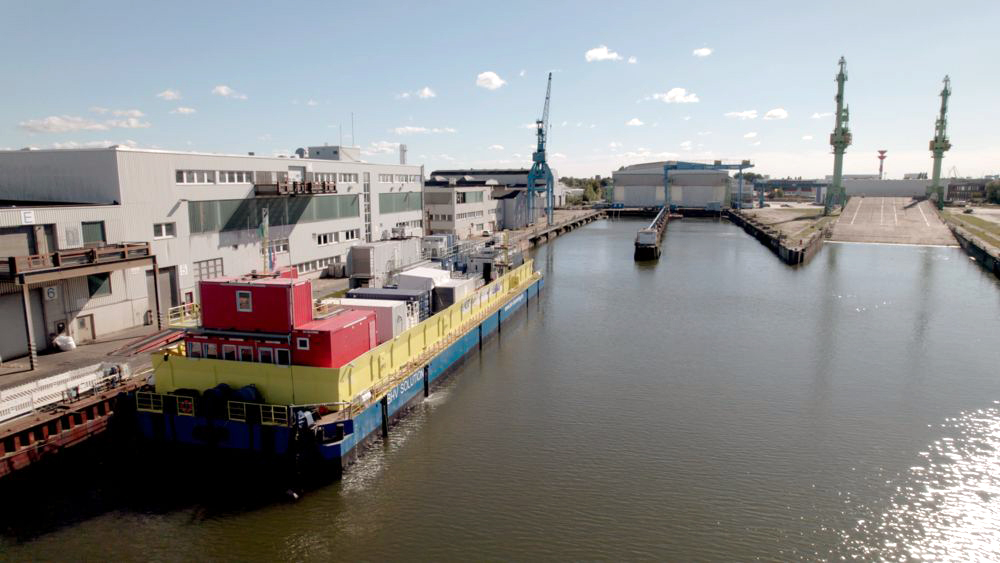
Measuring 60 meters long and 15 meters wide, it is arguably one of the most exciting floating research laboratories currently operating on the seven seas. At first glance, H2Mare looks like a rather mundane work platform, littered with stacks of containers. But the project of the same name has a total budget of 100 million euros and aims to save the atmosphere. Well, or at least to point the way toward tackling the CO2 problem, which is one of the causes of climate change.
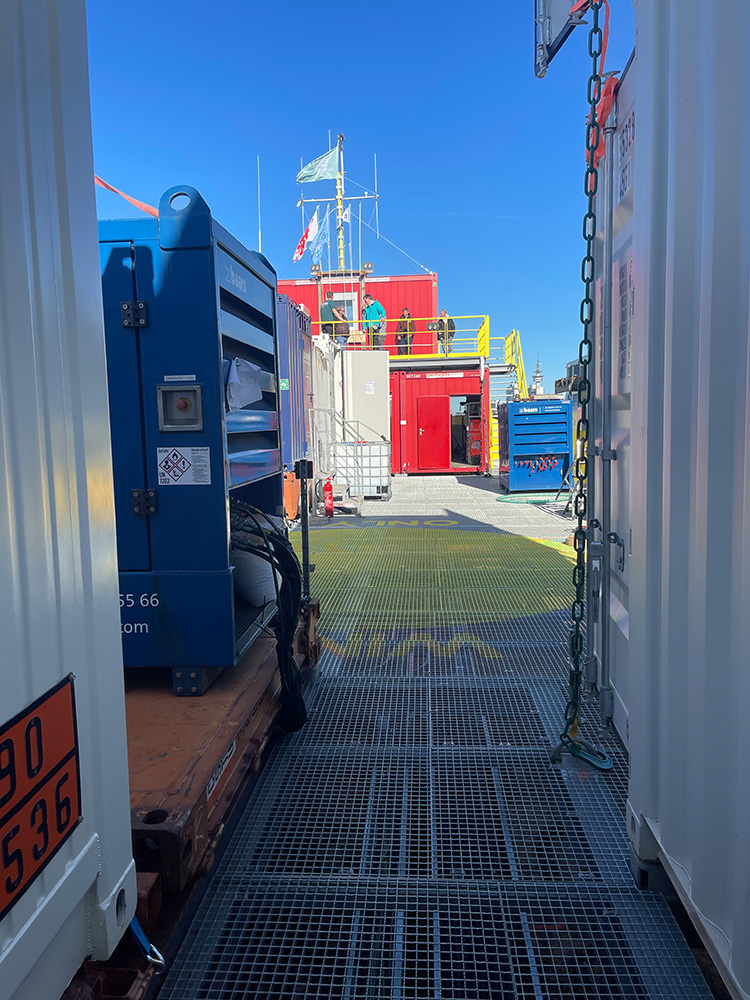
On board this floating platform, known as a barge, there are four separate projects that come together here to form a joint project. The first step is to capture CO2 from the air. The technology for this comes from the Hamburg-based company DACMA. And to a significant extent, from Phoenix Contact.
Also on board is a seawater desalination plant. In a special chemical process called co-electrolysis, electrical energy helps reduce the two molecules H2O and CO2 by one of their respective oxygen atoms. This makes the two remaining “residual molecules”—carbon monoxide (CO) and H2—highly reactive. This, in turn, is utilized in the subsequent process—the Fischer-Tropsch synthesis—to synthesize long-chain hydrocarbons such as e-fuels and to produce hydrogen via co-electrolysis. This hydrogen, together with the recovered CO2, is refined into liquid kerosene in a specialized plant. The energy required for the plants comes from offshore wind farms. The overall goal of the project is the completely renewable production of e-fuels.
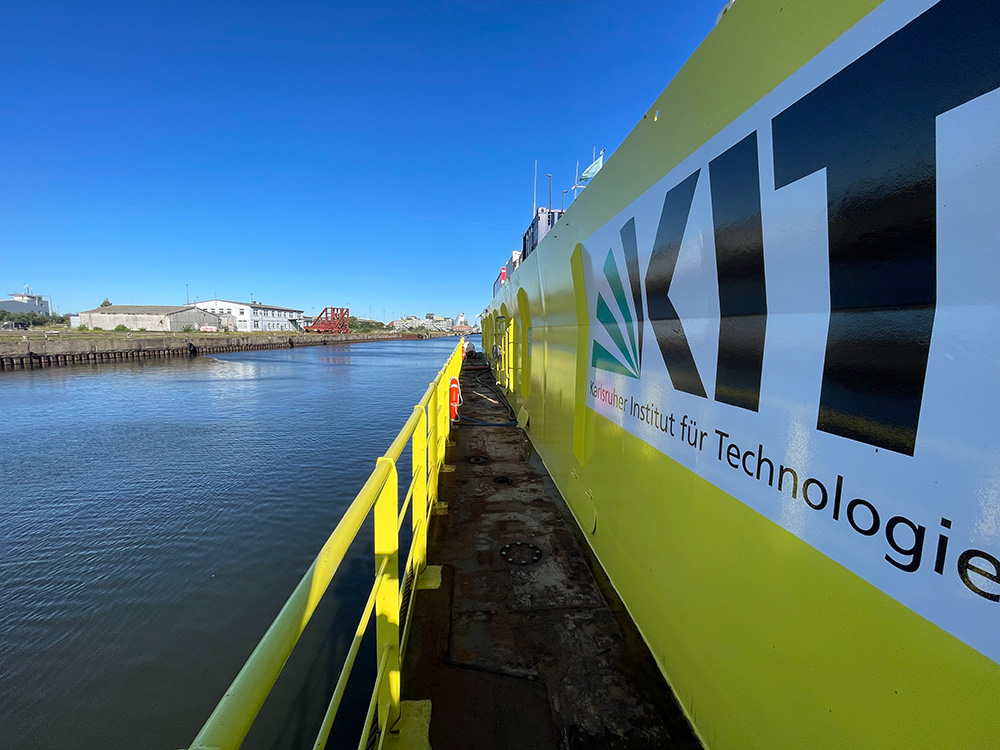
The Project H2Mare is taking place offshore, because the power supply from wind power is significantly more stable there than on land. And energy is one of the key ingredients for this ambitious endeavor. This is because molecules have a remarkable persistence in their efforts to hold their components together. Separating them requires sophisticated technology—and, indeed, a great deal of energy—to break them apart. Furthermore, there is ample space for such facilities on the open sea.
Innovators from the wingtip to the last molecule
Alexander Backs is the product manager at DACMA. “With our system installed here, we are able to capture and separate CO2 directly from the air at any location on Earth.” This is precisely what the H2Mare project aims to demonstrate, as the harsh, salty sea air poses challenging conditions for all the individual components combined here. “In this test setup, we use an adsorber not only to filter CO2 out of the air, but also to purify and liquefy it so that it can be made available to downstream systems,” explains the 40-year-old engineer. Backs had already been employed since 2012 at Spitzner Engineers, the engineering firm from which DACMA emerged. In earlier projects, he had already worked on optimizing the aerodynamics of aircraft wing profiles, with the aim of applying those insights to the rotor blades of wind turbines. The trained automotive engineer also contributed to the development of heating systems for wind turbine blades. This was a project in which Phoenix Contact was also involved.
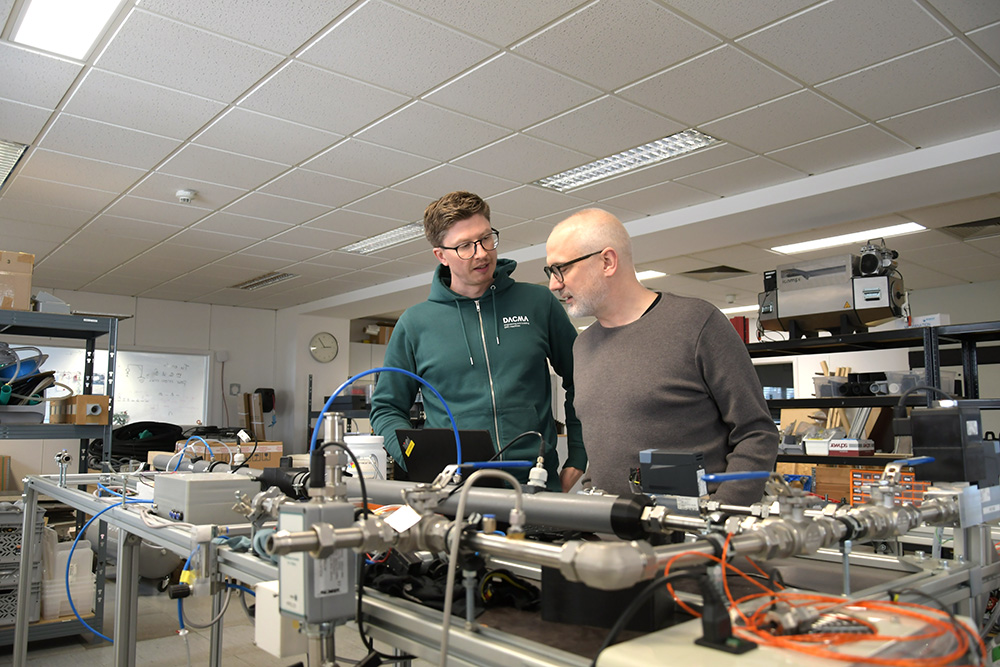
at the Hamburg Innovation Hub
In 2016, we began exploring the topic of CO2. At the time, we were inspired by the optimizations we’d achieved on rotor blades by adding openings to the blades, which allowed air to flow through them. “And we wanted to use that airflow to capture CO2.” The ideas developed by Jörg Spitzner’s team are always visionary (see also “He’s a Wind Power Innovator—A Visit with Jörg Spitzner”). “At first, we thought we could ‘wash’ the air, just like in a washing machine. Starting out small and under the radar, we then founded DACMA in 2019 and really got things going.”
At first, the engineers from Hamburg were focused on harnessing potential synergies in the field of wind turbines. There was airflow through the blades, waste heat from the generator, and renewable energy—all ideal ingredients for capturing CO2 directly from the air at the wind turbine. With plenty of enthusiasm and even more idealism, the North Germans initially set off for Switzerland, where there was already a spin-off from ETH Zurich called Climeworks (see also The CO2 Capturers). But disillusionment quickly set in, as the Swiss were focusing on large-scale facilities for filtering and storing CO2.
Start small, scale big
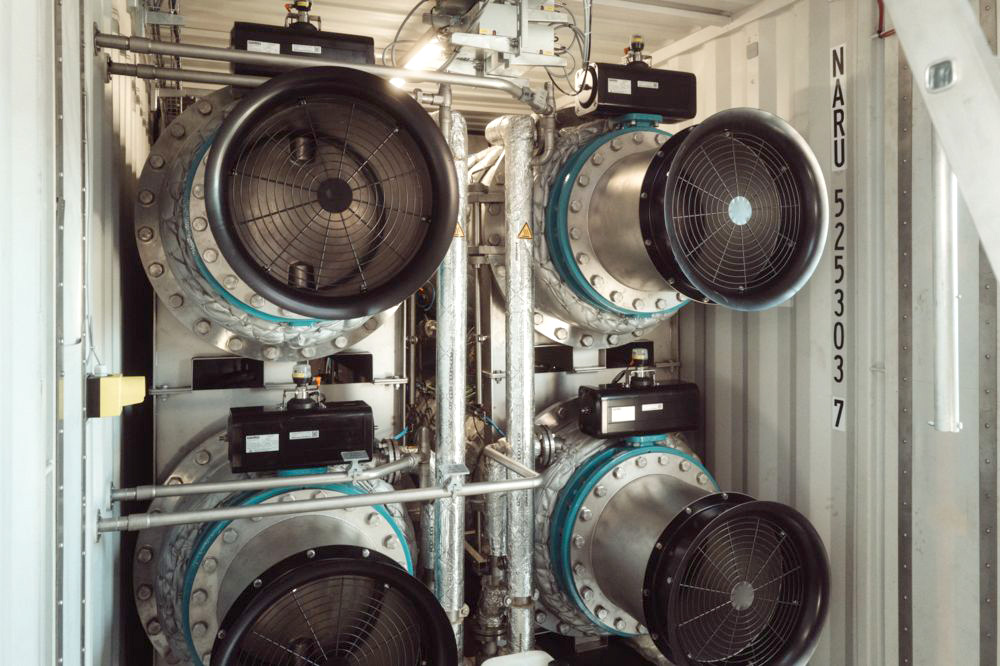
Alexander Backs smiles: “Nothing is too difficult for an engineer. So we figured we’d just build the systems ourselves!” The catch: There were only small-scale research projects and virtually no literature on the subject. Apart from in the lab, no systems had yet been built that could capture more than a few grams of CO2. And even the necessary supplier industry—for evaporators, fans, or vacuum pumps, for example—didn’t know how to handle DACMA’s exotic requirements at first. Groundwork was in order. “The whole field is very hardware-intensive and therefore expensive. So the issue of financing was also a central concern from the very beginning,” Backs continues.
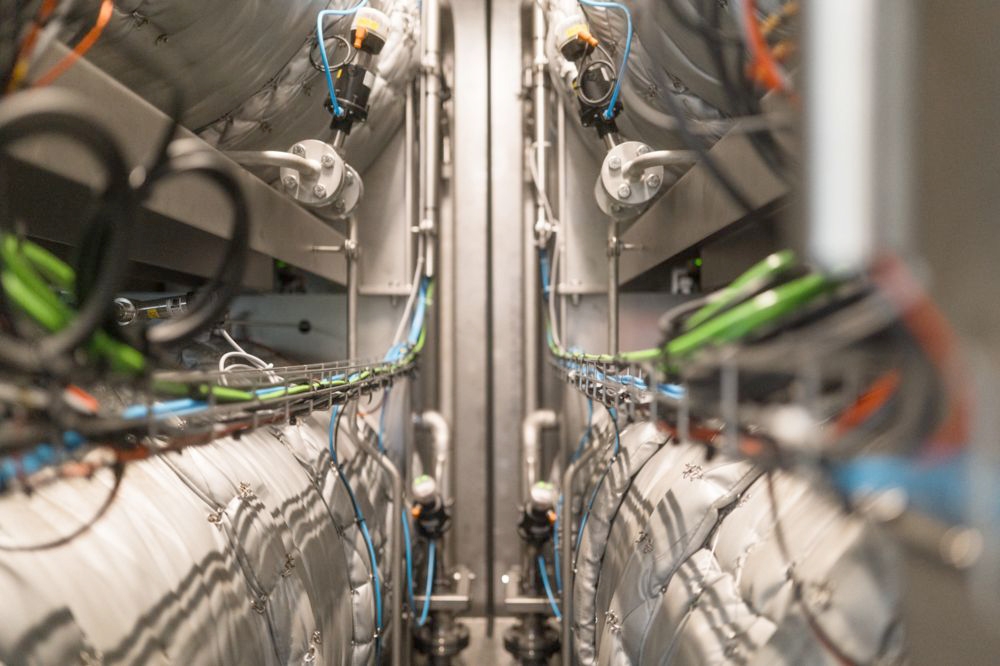
should be slender
“I was the project manager from the very first idea—through a research and then a development project—all the way to the proof of concept, and then helped set up the initial production run and organize international prototypes and facilities.” Backs points with his thumb behind him toward an open container: “Here we can already see the next generation of systems, which can be assembled and expanded in a modular, container-sized configuration. We’ve already set up this type of system in Brazil, among other places.” He adds with a touch of pride: “It’s the largest system of its kind in South America.” Each project is individually engineered and adapted to the local environment. “We now have a broad range of expertise: design engineers, structural engineers, chemical engineers, process engineers, electrical engineers, and automation experts—only the production itself is handled by partner companies. And research on the adsorbents—that is, the substances we use to capture CO2 from the atmosphere—is being conducted by research companies.”
The Ideal Project Partner from East Westphalia
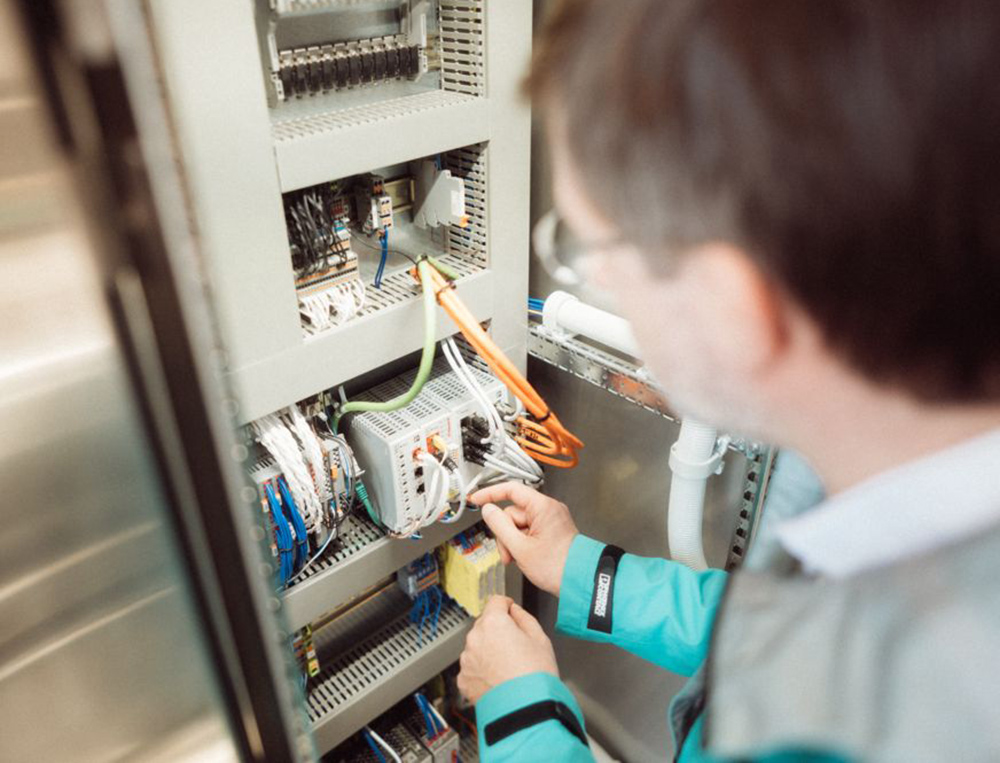
the custom-built control cabinets
Phoenix Contact has been a partner of DACMA from the very beginning. Ingo Gerhardt, the account manager at Phoenix Contact, describes the close collaboration on this innovative project: “Our role encompasses the entire electrical engineering design, including PLCnext control technology and its programming, control cabinet manufacturing, and the automation of the systems. The control cabinets, including the operator panel—which significantly simplifies on-site operation—were built by our Combinations department and commissioned here. We are now even building the low-voltage cabinet ourselves, since the previous supplier was unable to provide adequate documentation.”
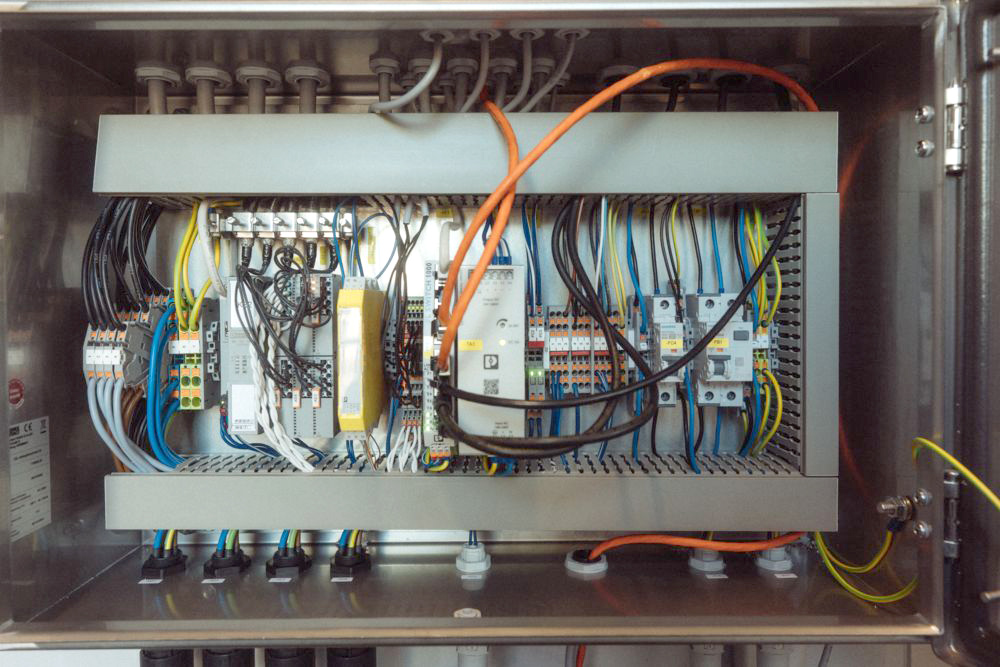
Thanks to the Profinet bus system used, single-wire wiring became virtually obsolete. This project was one of the first applications in process engineering to use Single-Pair Ethernet (SPE) switches. The SPE sensors controlled in this way measure many additional parameters, such as flow rates, temperatures, or pressures. Other data is collected by Axioline E modules; these can be installed directly on the adsorber modules without the need for an additional control cabinet and are suitable for receiving signals in confined spaces. The data is collected by Axioline E modules, which comply with the IP67 standard and are therefore particularly well-protected against environmental influences. The data is then transmitted to the PLCnext Control.
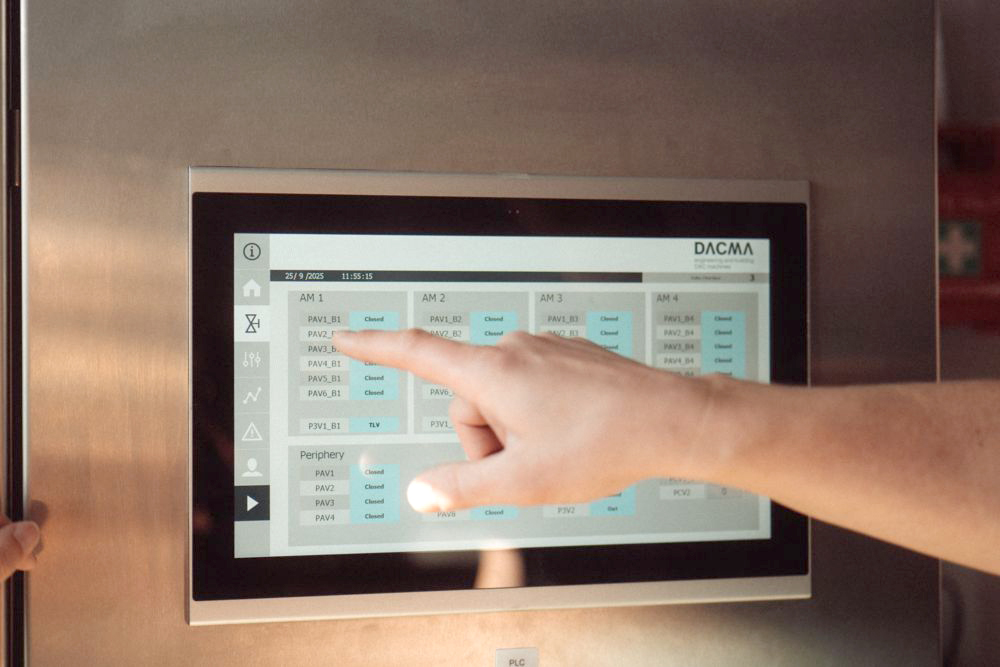
Alexander Backs explains: “Connecting to cloud services was uncharted territory for us. Right now, we’re working with Phoenix Contact’s own Proficloud.” Ingo Gerhardt adds: “This is a cost-effective way to make the data—which is still relatively modest in volume—quickly available. For smaller applications, this works seamlessly even in the process industry. Of course, the cloud integrates seamlessly with our control technology from the PLCnext family.”
Thanks to a comprehensive safety analysis conducted by Phoenix Contact’s in-house Safety and Security Department, it was possible to prepare the documentation required for the system’s certification. These efforts were rewarded with approval from the German TÜV. This made it possible to obtain approval for the systems in countries such as Brazil without the need for separate certification. In fact, four of these systems are already in daily use there.
Size does matter
DACMA is currently planning its first second-generation industrial-scale systems in Canada. To this end, everything directly related to the absorption material is manufactured in Hamburg. All other components—that is, the large standard components—are purchased locally and installed on site. What fits into 20- or 40-foot containers here takes on the scale of buildings there.
The experts at DACMA have now moved significantly away from the original idea of a wind turbine that, when the grids are overloaded, can capture CO2 as a byproduct of excess energy. Alexander Backs explains the obvious reasons: “CO2 capture facilities are so large, process-intensive, and costly that, ideally, they must run at full capacity around the clock, 24/7. Only large-scale plants, such as the ones we are currently building in Canada, can achieve this. This is also important for investors, who don’t want to wait 20 years or longer for a return on their investment. Small-scale plants, such as the one here in the H2Mare project, are demonstration plants that allow us to test and improve the technology.”
A single first-generation plant of this type can capture up to 60 metric tons of CO2 from the air each year. While this may sound impressive at first, it is nothing more than a drop in the bucket: “More than 100 million metric tons of CO2 are pumped into the atmosphere every day.” Subsequent generations of plants will indeed capture significantly more CO2. But it’s clear that the problem gas won’t disappear from the atmosphere through the efforts of industrial CO2 capture systems alone. The only solution is to transition the global economy away from fossil fuels.
And yet, the approach taken by the overall H2Mare project is forward-looking. After all, there will continue to be applications in the future where carbon-based materials cannot be replaced—whether in pharmaceuticals, plastics, or specialty fuels, such as those used in aviation. And hydrogen, the “byproduct,” will also be needed in ever-increasing quantities in the future. The technologies developed by Hamburg-based DACMA can make a substantial contribution to this—by skimming and capturing…
DACMA GmbH
Wasserstoffleitprojekt H2Mare
Karlsruher Institut für Technologie KIT
Phoenix Contact Power-to-X